WORKSHEETS
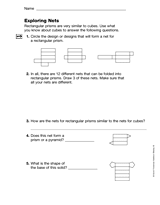
Students use their knowledge of cubes to answer questions about rectangular prisms.
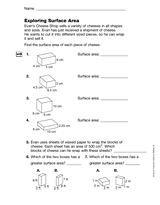
Use this activity to have your students find the surface area of rectangular prisms to solve problems. The worksheet…
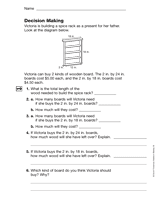
Students use decision making skills to solve story problems involving measurements.
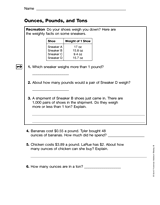
Students use the weights provided to solve story problems.
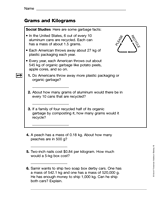
Students answer story problems involving grams and kilograms.
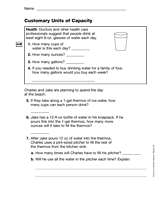
In this worksheet, your students convert fluid ounces, cups, and gallons to solve story problems. Visual representations…
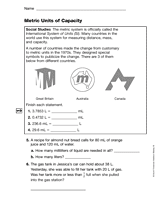
Your students will learn about the history of the metric system and convert metric units of volume to solve problems, in…
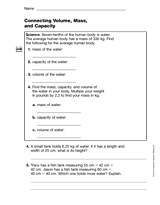
Your students will use the information provided to answer questions about the volume, mass, and capacity of the human…
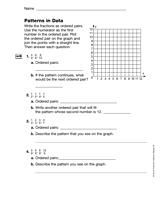
Students order fractions, plot the data on a graph, and then answer questions.
Students employ critical thinking skills to solve ratio, percent, and probability math problems.
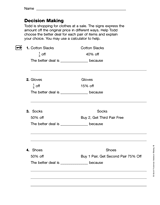
Students employ decision making skills to solve math problems.
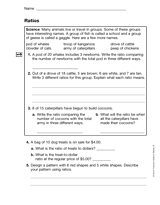
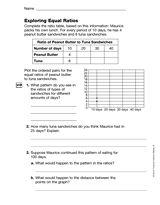
Students explore ratios as they solve these word problems.
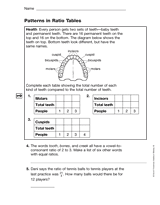
Students identify the ratio pattern, then complete each table.
Students use the information provided to complete each ratio table.
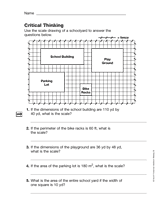
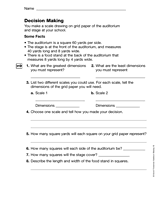
Students make a scale drawing on grid paper of their school's auditorium and stage, and then answer questions.
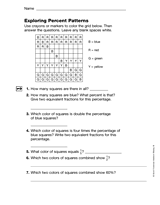
Students explore percent patterns by coloring a grid and answering questions.
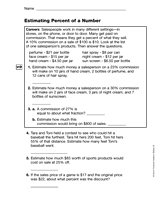
Students estimate the percent of a number to solve story problems.
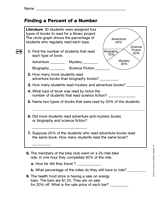
Students use the percentages in a circle graph to answer questions.
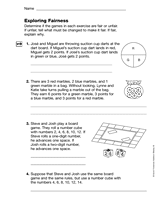
Students determine if the game in each exercise is fair or unfair.
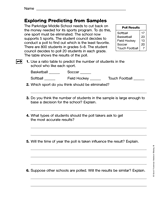
Students use a ratio table to answer questions about prediction.
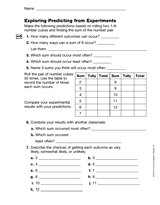
Students make predictions based on the results of their experiment.
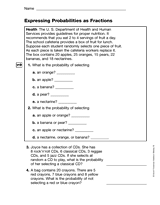
Students determine the probability for each situation, and express the answer as a fraction.
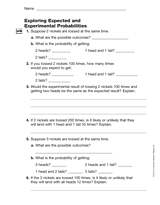
Students explore the expected and experimental answers to probability problems.
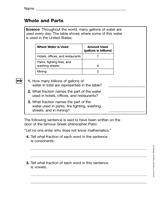
Students use the information provided to determine fractions and solve problems.